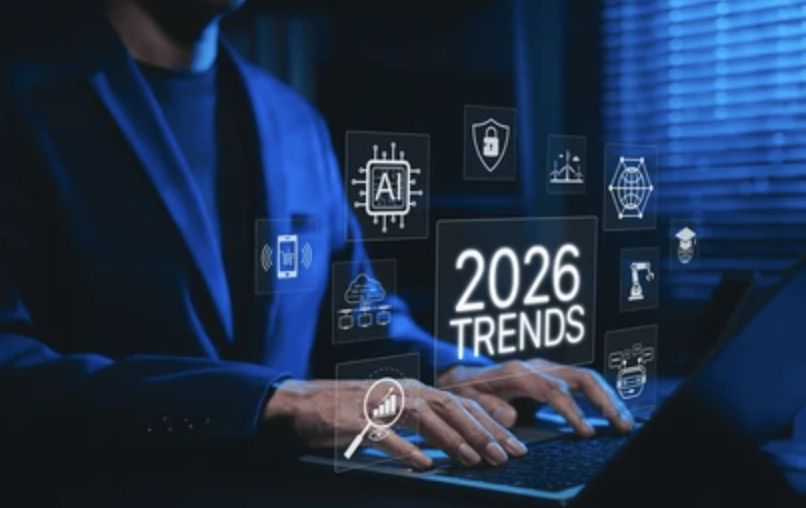
The year 2026 is a breakthrough period for global technology innovation. From artificial intelligence to cyber-physical systems and next-gen mobile hardware, technological transformation is reshaping industries, economies, and everyday life. Here is an in-depth analysis of the major technological shifts defining the year.
1. Artificial Intelligence Dominates Global Innovation
AI continues to lead the digital revolution. Companies are integrating AI into their core systems, boosting efficiency, improving consumer experience, and reducing costs.
1.1 AI Adoption in Small Businesses
Small enterprises are increasingly using AI tools for customer support, scheduling, marketing automation, and inventory management.
1.2 AI-Powered Enterprise Automation
Supply-chain automation, predictive maintenance, and AI-generated insights are helping global enterprises streamline operations.
2. Cybersecurity Threats Reach New Levels
As digital adoption increases, cybersecurity threats have become more sophisticated. Businesses and governments are doubling their cybersecurity budgets.
2.1 Rise in Phishing and Identity Theft
Cyber attackers are targeting remote workers through email phishing, social engineering, and network vulnerabilities.
2.2 AI-Driven Cyber Defense
AI security systems can now detect anomalies, prevent attacks, and respond instantly with automated shielding measures.
3. Cloud Computing Enters the Intelligent Era
Cloud platforms are integrating machine learning, automation, and smart resource allocation to enhance performance.
3.1 AI-Integrated Cloud Infrastructure
Cloud providers now offer services that include smart workload balancing, cost optimization, and instant scalability.
3.2 Growth of Hybrid Cloud
Businesses prefer hybrid cloud models to balance security, flexibility, and control.
4. Smartphones Get Next-Generation Upgrades
Smartphone companies are rolling out advanced battery technologies, new chip architectures, and AI-enhanced cameras.
4.1 Ultra-Fast Charging Batteries
New battery technology promises longer performance and rapid charging with minimal heat generation.
4.2 AI-Integrated Camera Processing
Smartphones can now automatically enhance images, recognize scenes, and adjust lighting for professional results.
5. Robotics and Automation Take Over Industries
Robots are now widely used in manufacturing, healthcare, logistics, and retail to improve operational efficiency.
5.1 Warehouse Robotics Growth
Warehouse robots are performing sorting, packing, and transportation tasks with speed and accuracy.
5.2 Healthcare Robotics
Robot-assisted surgeries, automated diagnostics, and AI-based imaging tools are improving patient outcomes.
Conclusion
The technology landscape of 2026 is fast, intelligent, and highly interconnected. AI, robotics, cybersecurity, smartphones, and cloud computing are driving the future of global innovation.